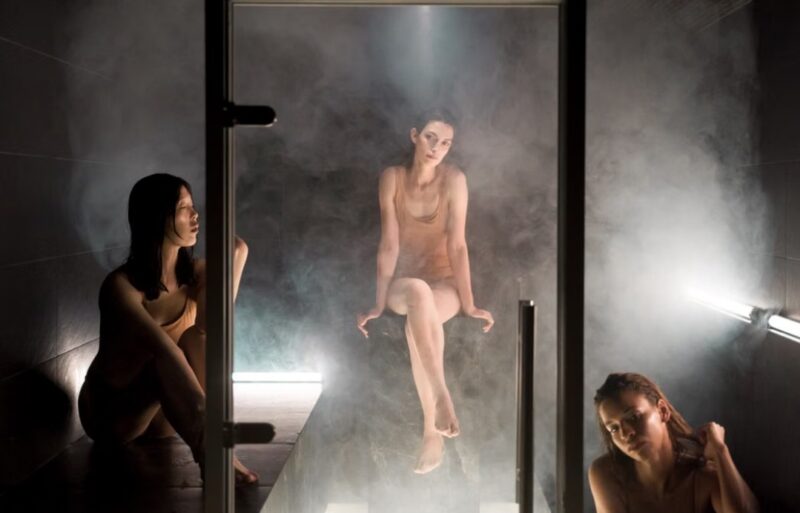
Steam rooms create a warm, humid environment by filling an enclosed space with heated water vapour. Unlike traditional saunas, which produce high temperatures with relatively dry air, steam rooms operate at lower temperatures while maintaining humidity close to saturation.
A successful installation requires more than choosing a steam generator. The room must be properly sealed, waterproofed, ventilated, drained, and connected to suitable electrical and plumbing services. Careful planning helps prevent moisture damage and ensures comfortable, reliable operation.
How a Steam Room Produces Heat and Humidity
The steam generator heats water until it becomes vapour and then delivers that vapour into the room through a steam outlet. As the space fills, the combination of heat and moisture creates the characteristic steam-room environment.
A control panel allows users to set the preferred temperature and operating time. Depending on the system, additional features may include lighting, fragrance delivery, music controls, automatic flushing, and programmable operating schedules.
The generator must be correctly sized for the room. The calculation considers internal volume as well as wall materials, ceiling height, glass surfaces, and other features that can affect heat loss. A unit that is too small may struggle to maintain suitable conditions, while an oversized generator may operate inefficiently.
Instead of endlessly searching for “buy steam room” on Google, save time by visiting https://saunasteamqld.com.au/steam/ to view high-quality European-made steam rooms. Comparing complete systems can make it easier to understand the equipment, controls, and installation components required.
Prepare the Room for Constant Moisture
Every internal surface must be able to tolerate prolonged exposure to heat and condensation. The walls, floor, ceiling, benches, joints, and penetrations require an appropriate waterproofing system beneath the finished surface.
Non-porous materials such as suitable tiles, stone, glass, or purpose-made panels are commonly used. Material selection should account for slip resistance, cleaning requirements, heat retention, and compatibility with the waterproofing system.
The ceiling should be designed to manage condensation so that cold droplets do not fall directly onto users. Benches need to be comfortable, stable, and positioned away from the steam outlet to prevent contact with concentrated hot vapour.
A properly graded floor and suitable drain allow condensed water to leave the room. Doors should resist moisture, open safely, and minimise steam loss without creating an airtight space that could present an operational problem.
Plan the Utilities, Ventilation and Maintenance Access
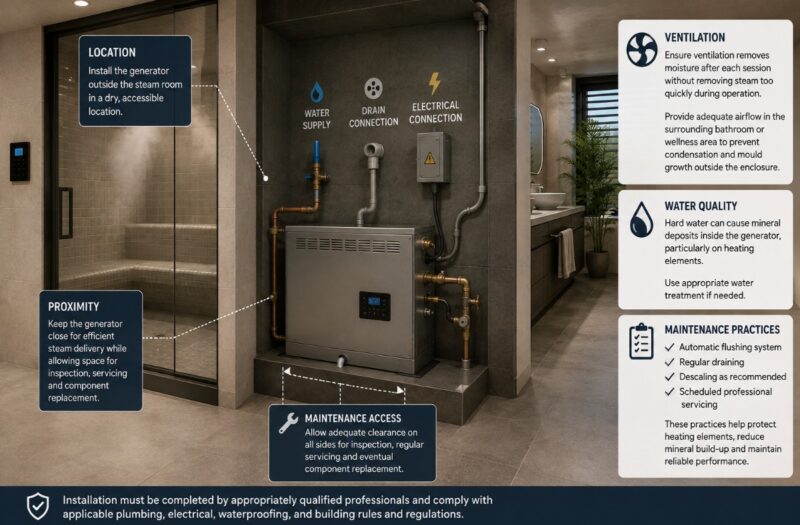
The generator requires a dependable water supply, drainage connection, and electrical circuit that matches the manufacturer’s requirements. Installation should be completed by appropriately qualified professionals and comply with applicable plumbing, electrical, waterproofing, and building rules.
The generator is normally installed outside the steam room in a dry, accessible location. It should be close enough for efficient steam delivery while leaving adequate space for inspection, servicing, and eventual component replacement.
Ventilation must manage moisture after each session without removing steam too quickly during operation. The surrounding bathroom or wellness area also needs adequate airflow to prevent condensation and mould growth outside the enclosure.
Water quality can affect maintenance requirements. Mineral deposits may accumulate inside the generator, particularly in areas with hard water. Automatic flushing, regular draining, descaling, and scheduled servicing can help protect heating elements and maintain performance.
Conclusion
A steam room works by using a generator to deliver heated water vapour into a purpose-built enclosure. Correct generator sizing and a suitable control system are essential, but the room’s construction is equally important.
Before installation, plan the waterproofing, drainage, ventilation, electrical supply, plumbing, surface materials, and service access. A professionally designed system will provide more consistent steam, simplify maintenance, and protect the surrounding building from long-term moisture damage.